
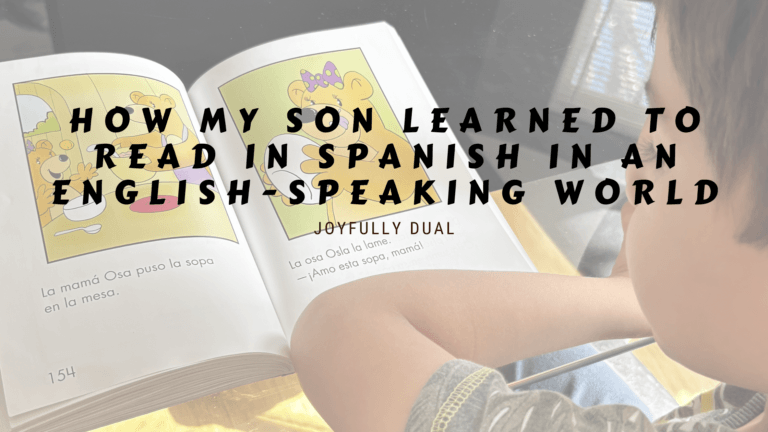
If you’re wondering how to teach a child to read in Spanish while living in an English-speaking environment, you’re not alone. The process begins much earlier than most parents realize, with oral language.
In our home, the journey didn’t begin with flashcards, worksheets, or even letters.
It began with conversation.
I still remember holding my son as a newborn, whispering to him in Spanish. At the time, I wasn’t thinking about phonics, literacy, or reading instruction. I was simply speaking to my baby in the language that felt like home.
Looking back now, I realize something important:
That was the beginning of his reading journey.
And honestly, I believe this is one of the most overlooked parts of teaching a child to read in Spanish.
How My Son Learned to Read in Spanish Series
Part 1: Oral Language Foundations ← You are here
Part 2: Phonemic Awareness in Spanish
Part 3: Introducing Letters with Montessori
Part 4: Blending Sounds and First Words
In this blog post you’ll learn:
- Why oral language matters before reading
- How bilingual children develop literacy skills
- Simple ways to build Spanish language at home
- Why Spanish literacy supports English reading later
How to Teach a Child to Read in Spanish: Start with Oral Language
If there’s one stage I would never skip when teaching a child to read, it’s oral language development.
This stage often gets underestimated because it doesn’t look “academic.” There are no worksheets, spelling tests, or alphabet drills.
But oral language is doing the heaviest lifting.
Before children can read words, they need to understand language. They need to hear it, process it, play with it, and connect meaning to it.
Reading does not suddenly begin when children learn letters. Reading is built on a strong foundation of spoken language.
From the very beginning, we made a conscious decision as a family: Spanish would be our priority language at home.
Because we live in an English-speaking environment, we knew we needed to be intentional about creating rich Spanish language exposure every day.
Spanish became the language of our:
- conversations
- songs
- bedtime routines
- stories
- playtime
- daily interactions
It was present in the smallest moments:
- while getting dressed
- during bath time
- at the dinner table
- on walks outside
- while grocery shopping
- while naming objects around the house
At the time, it simply felt like parenting.
But those moments were building the foundation for bilingual literacy.
Key Takeaway
Reading begins long before children recognize letters. Strong oral language skills create the foundation for literacy in both Spanish and English.
How Oral Language Supports Reading Development
Early oral language experiences help children develop:
- vocabulary
- listening comprehension
- sentence structure awareness
- sound discrimination
- background knowledge
- communication skills
These are all essential pre-reading skills.
Children who hear rich language consistently are better prepared to:
- understand stories
- recognize patterns in language
- process sounds
- make meaning from text later on
And importantly, oral language development does not stop once children begin reading. It continues throughout the entire literacy journey.
Everyday Activities That Build Pre-Reading Skills in Spanish
One of the biggest things I learned is this: You do not need formal lessons to build literacy foundations.
Some of the most powerful learning happened during ordinary moments.
1. Reading Aloud Daily
We read books together every single day. Not perfectly. Not always with full attention. But consistently.
Sometimes I pointed to the words. Sometimes I changed my voice for different characters. Sometimes I paused to ask questions, even before he could answer.
Those interactions mattered.
2. Singing Songs and Rhymes
Songs helped him hear rhythm, repetition, and sounds in language. We repeated the same songs over and over again.
That repetition built familiarity and confidence.
3. Narrating Daily Life
I talked constantly throughout the day.
I described:
- what we were doing
- what we were seeing
- what he was feeling
- what objects were called
This expanded his vocabulary naturally.
4. Asking Questions
Even before he could respond fully, I asked questions:
- “¿Dónde está el perro?”
- “¿Qué ves?”
- “¿Qué crees que va a pasar?”
This encouraged active listening and comprehension.
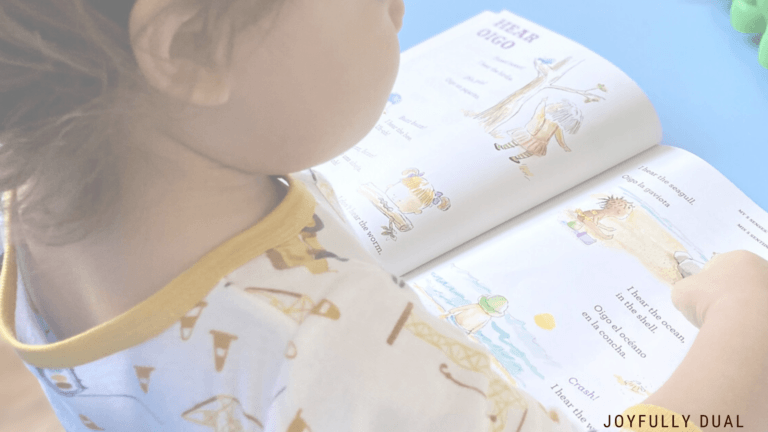
Why Teaching Reading in Spanish Helps with English Later
One of the biggest misconceptions about bilingual reading is the idea that children become “confused” learning two languages.
But many literacy skills transfer across languages.
If a child understands:
- how stories work
- how sounds function
- how words are organized
- how language communicates meaning
They can apply those skills in English later.
The vocabulary itself may not transfer directly. But the underlying literacy skills absolutely do.
This is one reason why building strong Spanish literacy can support English reading development later on.
Simple Ways to Build Oral Language at Home
If you want to support Spanish language development at home, start small.
You can:
- narrate your daily routines in Spanish
- sing repetitive songs
- read aloud daily
- ask open-ended questions
- repeat vocabulary naturally
- describe what your child is doing during play
- tell family stories in Spanish
- make Spanish part of everyday life
You do not need perfection. You need consistency
A Quick Encouragement for Parents Raising Bilingual Readers
If you didn’t start speaking Spanish from birth, please don’t feel like you missed your opportunity.
Language development is not all-or-nothing. Children can begin building strong literacy foundations at many different ages.
You can start today.
Talk more. Read more. Sing more. Connect more.
Small moments matter more than perfect lessons.
Coming Next in the Series
In Part 2, I’ll share how I introduced phonemic awareness in Spanish through simple, playful activities when my son was around 2.5 years old.
→ Read Part 2: How I Taught Phonemic Awareness in Spanish Through Play